
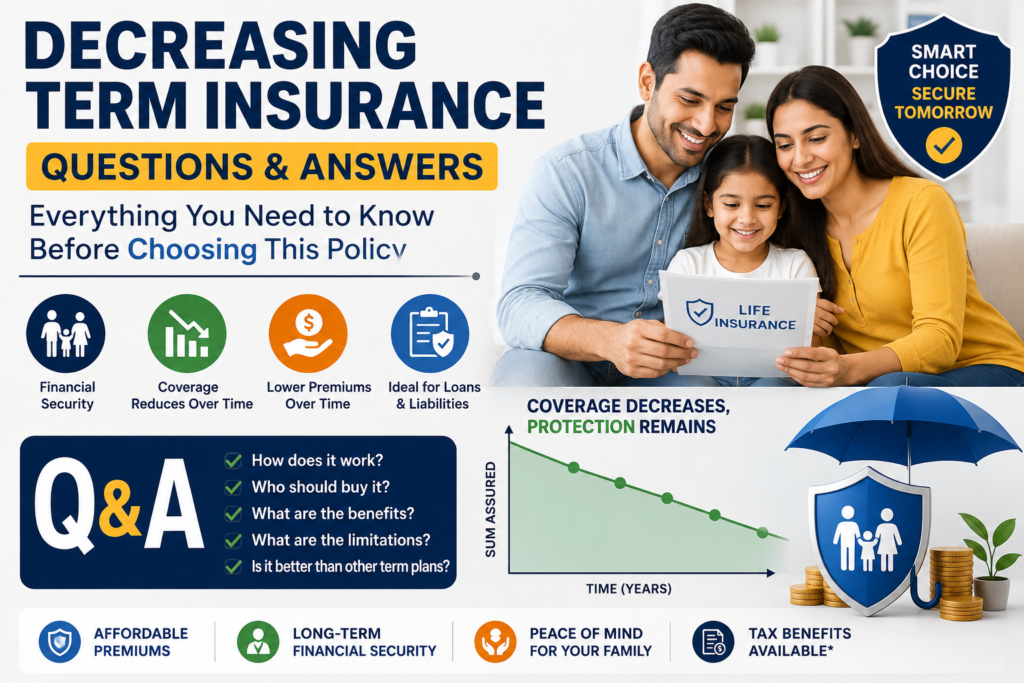
Decreasing Term Insurance is designed to provide life insurance protection while the coverage amount gradually decreases over the policy term. It is commonly used to help protect financial obligations that reduce over time, such as certain home loans or other debts. These questions explain the basics to help you understand whether this type of policy fits your financial needs.
Q1. What Is Decreasing Term Insurance?
Quick Answer
Decreasing Term Insurance is a type of term life insurance in which the death benefit gradually decreases during the policy term according to the policy schedule.
Why It Matters
It is designed for financial responsibilities that reduce over time, helping provide appropriate protection without paying for more coverage than you may need later.
Detailed Explanation
Unlike Level Term Insurance, where the death benefit remains the same throughout the policy term, Decreasing Term Insurance reduces the insured amount over time. The premium structure depends on the policy and insurer.
Pro Tip
Always review the schedule showing how the coverage decreases before purchasing the policy.
Q2. How Does Decreasing Term Insurance Work?
Quick Answer
The policy starts with a higher coverage amount that gradually decreases until the end of the policy term.
Why It Matters
This structure is intended to align with financial obligations that decline over time.
Detailed Explanation
The reduction follows the terms specified in the insurance contract. While the coverage decreases, the policy remains active as long as all required premium payments are made according to the policy.
Pro Tip
Request a yearly coverage illustration before purchasing.
Q3. Why Do People Choose Decreasing Term Insurance?
Quick Answer
Many people choose it because their financial liabilities are expected to reduce over time.
Why It Matters
Matching insurance coverage with financial obligations can be an effective protection strategy.
Detailed Explanation
This type of policy is often considered by people with repayment plans where the outstanding balance declines over the years.
Pro Tip
Evaluate your future financial commitments before choosing any life insurance policy.
Q4. Is Decreasing Term Insurance a Type of Life Insurance?
Quick Answer
Yes. It is a form of term life insurance that provides coverage for a specified period.
Why It Matters
Understanding the policy category helps you compare it with other types of life insurance.
Detailed Explanation
The policy provides a death benefit during the coverage period, subject to the policy’s terms, conditions, and exclusions.
Pro Tip
Compare Decreasing, Level, and Increasing Term Insurance before making a decision.
Q5. What Happens to the Coverage Over Time?
Quick Answer
The insured amount gradually decreases according to the policy schedule.
Why It Matters
Knowing how coverage changes helps you determine whether the policy fits your future financial needs.
Detailed Explanation
The decrease follows the policy contract and is predetermined when the policy is issued.
Pro Tip
Review the reduction schedule carefully before purchasing.
Q6. How Long Does Decreasing Term Insurance Last?
Quick Answer
The policy remains in force for the selected term, such as 10, 20, or 30 years, depending on the insurer’s offerings.
Why It Matters
Choosing the correct policy term is essential for adequate financial protection.
Detailed Explanation
The policy expires at the end of the selected term unless other options are available under the policy.
Pro Tip
Select a policy term that closely matches your financial obligations.
Q7. Is Decreasing Term Insurance Permanent Life Insurance?
Quick Answer
No. It is temporary life insurance that provides protection only during the selected policy term.
Why It Matters
Understanding the difference helps you choose the appropriate type of insurance.
Detailed Explanation
Unlike permanent life insurance, Decreasing Term Insurance generally does not provide lifelong coverage.
Pro Tip
Choose term insurance if your protection needs are temporary.
Q8. Can Anyone Buy Decreasing Term Insurance?
Quick Answer
Eligibility depends on the insurer’s underwriting requirements, including factors such as age, health, and other application criteria.
Why It Matters
Knowing eligibility requirements helps you prepare before applying.
Detailed Explanation
Each insurance company has its own underwriting guidelines that determine whether an applicant qualifies for coverage.
Pro Tip
Review the insurer’s eligibility requirements before submitting an application.
Q9. Is the Death Benefit Guaranteed During the Policy Term?
Quick Answer
The applicable death benefit is determined according to the policy schedule and terms if the policy is active and all conditions are met.
Why It Matters
Understanding the benefit structure helps avoid confusion later.
Detailed Explanation
The payable amount depends on the scheduled coverage in effect on the date of the insured event, subject to the policy provisions.
Pro Tip
Read the policy contract carefully to understand how benefits change over time.
Q10. Is Decreasing Term Insurance Right for Everyone?
Quick Answer
No. The suitability of this policy depends on your financial goals, obligations, and long-term protection needs.
Why It Matters
Different people require different insurance solutions.
Detailed Explanation
Before purchasing any life insurance policy, compare different types of coverage and determine which one best supports your family’s financial security.
Pro Tip
Choose the policy that matches your specific financial responsibilities rather than selecting a policy based only on price.
Q11. What Is the Main Purpose of Decreasing Term Insurance?
Quick Answer
The main purpose is to provide life insurance protection for financial obligations that reduce over time.
Why It Matters
Matching insurance coverage with declining financial commitments may help provide appropriate protection throughout the policy term.
Detailed Explanation
As outstanding debts or financial responsibilities decrease, the policy’s death benefit also decreases according to the policy schedule.
Pro Tip
Consider your future financial commitments before selecting the coverage amount.
Q12. Does the Coverage Decrease Automatically?
Quick Answer
Yes. The death benefit decreases automatically based on the schedule defined in the insurance policy.
Why It Matters
Understanding how coverage changes helps you plan your family’s future financial protection.
Detailed Explanation
The reduction schedule is established when the policy begins and continues throughout the policy term according to the contract.
Pro Tip
Review the coverage schedule every few years to ensure it still meets your needs.
Q13. Is Decreasing Term Insurance Commonly Used for Home Loans?
Quick Answer
Yes. It is commonly considered for financial obligations that reduce over time, including certain mortgage or home loan arrangements.
Why It Matters
Loan balances often decrease over time, making this policy structure suitable in some situations.
Detailed Explanation
Because the insurance benefit declines over time, it may align with loans that are gradually repaid according to schedule.
Pro Tip
Compare your loan repayment schedule with the policy’s decreasing benefit schedule.
Q14. Can I Choose the Policy Term?
Quick Answer
Yes. Many insurers offer different policy terms, subject to their available products and eligibility requirements.
Why It Matters
Choosing an appropriate term helps ensure your coverage matches your financial obligations.
Detailed Explanation
Available terms vary by insurer and may include options such as 10, 20, or 30 years.
Pro Tip
Select a policy term that closely matches the duration of your financial commitments.
Q15. Does the Policy End After the Selected Term?
Quick Answer
Yes. The policy generally ends when the selected term expires unless the policy provides another option.
Why It Matters
Understanding when coverage ends helps with future financial planning.
Detailed Explanation
After the policy term ends, life insurance protection usually stops unless another arrangement is available under the policy.
Pro Tip
Review your insurance needs before the policy expires.
Q16. Can the Coverage Ever Increase?
Quick Answer
Generally, no. The coverage follows the decreasing schedule stated in the policy contract.
Why It Matters
Understanding the benefit structure helps avoid misunderstandings.
Detailed Explanation
Unlike Increasing Term Insurance, this policy is specifically designed for gradually decreasing coverage.
Pro Tip
Choose the policy type that best matches your future financial needs.
Q17. Does Decreasing Term Insurance Build Cash Value?
Quick Answer
No. Decreasing Term Insurance generally does not build cash value.
Why It Matters
Understanding the policy’s features helps you compare it with permanent life insurance products.
Detailed Explanation
Its primary purpose is to provide life insurance protection during the selected policy term rather than investment or savings features.
Pro Tip
If cash value is important to you, compare other types of life insurance as well.
Q18. Is a Medical Examination Sometimes Required?
Quick Answer
Possibly. Medical requirements depend on the insurer, policy amount, applicant’s age, health, and underwriting guidelines.
Why It Matters
Knowing the application process helps you prepare in advance.
Detailed Explanation
Some applicants may be asked to complete health questionnaires or medical examinations depending on the insurer’s requirements.
Pro Tip
Provide complete and accurate health information during the application process.
Q19. Is Decreasing Term Insurance Expensive?
Quick Answer
Premiums vary depending on factors such as age, health, coverage amount, policy term, and the insurer.
Why It Matters
Understanding pricing helps you choose a policy that fits your budget.
Detailed Explanation
Compare several insurers and policy features instead of assuming one policy offers the best value.
Pro Tip
Focus on both affordability and appropriate coverage.
Q20. What Should I Understand Before Buying Decreasing Term Insurance?
Quick Answer
You should understand how the coverage decreases, the policy term, premium obligations, exclusions, and whether the policy matches your financial goals.
Why It Matters
A clear understanding helps you choose the right insurance solution.
Detailed Explanation
Take time to compare different policy types, read the policy documents carefully, and evaluate your family’s future financial needs before making a decision.
Pro Tip
An informed insurance decision provides better long-term financial confidence.
Q21. Who Usually Benefits Most from Decreasing Term Insurance?
Quick Answer
People with financial obligations that decrease over time may find this type of policy suitable.
Why It Matters
Choosing the right policy helps match insurance protection with changing financial responsibilities.
Detailed Explanation
This policy is often considered by homeowners with repayment loans or individuals whose outstanding debts are expected to reduce gradually.
Pro Tip
Review your future debt schedule before selecting coverage.
Q22. Can Decreasing Term Insurance Protect My Family?
Quick Answer
Yes. If the insured person dies while the policy is active and all policy conditions are met, the applicable death benefit may help provide financial support to beneficiaries.
Why It Matters
Life insurance helps reduce financial stress during difficult times.
Detailed Explanation
The benefit amount depends on the scheduled coverage in effect on the date of the insured event and the policy terms.
Pro Tip
Ensure your beneficiaries know where your policy documents are stored.
Q23. Does Everyone Need Decreasing Term Insurance?
Quick Answer
No. Insurance needs vary depending on personal financial goals, family responsibilities, and future obligations.
Why It Matters
The best policy differs from one person to another.
Detailed Explanation
Some people may benefit more from Level or Increasing Term Insurance, depending on their long-term financial plans.
Pro Tip
Compare multiple policy types before making a final decision.
Q24. Can I Purchase More Than One Life Insurance Policy?
Quick Answer
Yes. Some people own multiple life insurance policies to meet different financial goals, subject to insurer underwriting and eligibility requirements.
Why It Matters
Different policies may provide protection for different financial responsibilities.
Detailed Explanation
Owning more than one policy may help address separate needs, such as mortgage protection and family income replacement.
Pro Tip
Review your total insurance coverage regularly.
Q25. Does the Death Benefit Stay the Same Throughout the Policy?
Quick Answer
No. The death benefit gradually decreases according to the policy schedule.
Why It Matters
Understanding the changing benefit helps you plan appropriately.
Detailed Explanation
The decrease is predetermined and described in the policy contract when coverage begins.
Pro Tip
Ask for a benefit schedule before purchasing the policy.
Q26. Does Decreasing Term Insurance Cover Natural and Accidental Death?
Quick Answer
Coverage depends on the policy’s terms, conditions, exclusions, and applicable provisions.
Why It Matters
Every insurance policy has its own coverage rules.
Detailed Explanation
Read the policy document carefully to understand what events are covered and what exclusions apply.
Pro Tip
Never assume coverage—always verify it in the policy contract.
Q27. Can I Cancel My Decreasing Term Insurance Policy?
Quick Answer
Yes. Cancellation options depend on the insurer and the policy’s terms and conditions.
Why It Matters
Understanding cancellation rules helps you make informed decisions.
Detailed Explanation
Review your policy documents to understand any cancellation procedures, notice requirements, or applicable conditions.
Pro Tip
Speak with your insurer before cancelling to understand the potential impact.
Q28. Should I Compare Different Insurance Companies?
Quick Answer
Yes. Comparing insurers helps you evaluate coverage, premiums, service quality, and financial strength.
Why It Matters
Not all insurance policies offer the same value.
Detailed Explanation
Review policy benefits, exclusions, claim procedures, customer service, and insurer reputation before purchasing.
Pro Tip
Compare several insurers instead of choosing the first policy you find.
Q29. Should I Read the Entire Policy Document?
Quick Answer
Yes. Reading the complete policy helps you understand your rights, responsibilities, and coverage.
Why It Matters
Understanding the contract reduces the chance of future misunderstandings.
Detailed Explanation
Review the policy schedule, exclusions, premium obligations, claim procedures, and beneficiary information carefully.
Pro Tip
Ask questions about any section you do not fully understand.
Q30. What Is the Most Important Thing to Remember About Decreasing Term Insurance?
Quick Answer
Choose the policy only if its decreasing coverage matches your declining financial obligations and long-term insurance needs.
Why It Matters
The right insurance policy provides appropriate protection without unnecessary coverage.
Detailed Explanation
Before purchasing, compare different types of term insurance, understand how the death benefit changes over time, and ensure the policy aligns with your financial goals.
Pro Tip
The best insurance decision is based on careful planning, informed comparison, and your family’s future financial security.
Q31. Can Decreasing Term Insurance Help Cover Outstanding Debts?
Quick Answer
Yes. It is commonly designed to help protect financial obligations that reduce over time, such as certain loans.
Why It Matters
The policy may provide financial support to beneficiaries if the insured dies while the policy is active.
Detailed Explanation
As debts decrease, the policy’s death benefit also decreases according to the policy schedule, helping align coverage with remaining financial obligations.
Pro Tip
Choose a policy term that closely matches the repayment period of your major debts.
Q32. Does My Age Affect Eligibility?
Quick Answer
Yes. Age is one of several factors insurers may consider when evaluating an application.
Why It Matters
Eligibility requirements vary among insurance companies.
Detailed Explanation
Insurers may also consider health, lifestyle, occupation, coverage amount, and other underwriting factors.
Pro Tip
Applying at a younger age may provide more policy options, depending on the insurer.
Q33. Can I Choose My Beneficiary?
Quick Answer
Yes. Most policies allow you to name one or more beneficiaries according to the insurer’s rules.
Why It Matters
Beneficiaries receive the policy benefits if a covered claim is approved.
Detailed Explanation
Review and update your beneficiary information whenever major life events occur, such as marriage or the birth of a child.
Pro Tip
Review your beneficiary details every year.
Q34. Is Decreasing Term Insurance Flexible?
Quick Answer
Flexibility depends on the insurer and the specific policy features.
Why It Matters
Policy options differ from one insurance company to another.
Detailed Explanation
Some policies may offer optional riders or additional features, while others focus on basic life insurance protection.
Pro Tip
Compare policy features before making your decision.
Q35. Does the Policy Protect My Family Immediately?
Quick Answer
Coverage generally begins according to the policy’s effective date, provided all required conditions have been met.
Why It Matters
Understanding when coverage starts helps avoid confusion.
Detailed Explanation
Review your policy documents to confirm the effective date, waiting provisions (if any), and all applicable terms.
Pro Tip
Keep a copy of your policy schedule for easy reference.
Q36. Can I Replace My Existing Life Insurance with Decreasing Term Insurance?
Quick Answer
It depends on your financial needs and existing coverage.
Why It Matters
Replacing a policy without careful evaluation may reduce your family’s financial protection.
Detailed Explanation
Carefully compare benefits, exclusions, premium obligations, and long-term suitability before replacing any existing policy.
Pro Tip
Seek professional advice before cancelling an existing life insurance policy.
Q37. Is Financial Planning Important Before Buying This Policy?
Quick Answer
Yes. Insurance should support your overall financial plan.
Why It Matters
Proper planning helps ensure the policy meets your long-term goals.
Detailed Explanation
Consider your income, debts, dependents, future expenses, and overall financial responsibilities before selecting coverage.
Pro Tip
Review your insurance together with your broader financial plan.
Q38. Should I Review My Policy Regularly?
Quick Answer
Yes. Regular reviews help ensure the policy continues to meet your needs.
Why It Matters
Financial responsibilities change over time.
Detailed Explanation
Review your policy after major life events, including marriage, home purchases, career changes, or the birth of children.
Pro Tip
Schedule an annual insurance review.
Q39. Can I Buy Decreasing Term Insurance Online?
Quick Answer
Many insurers offer online application options, although availability varies by company and location.
Why It Matters
Online applications may simplify the purchasing process.
Detailed Explanation
Check the insurer’s official application process and eligibility requirements before applying online.
Pro Tip
Apply only through trusted and authorized insurance providers.
Q40. What Is the Best First Step Before Buying Decreasing Term Insurance?
Quick Answer
Understand your financial obligations, compare different policy options, and choose coverage that aligns with your long-term financial goals.
Why It Matters
Careful planning helps you select the most appropriate insurance solution.
Detailed Explanation
Review policy features, insurer reputation, premium affordability, and future financial needs before making your decision. An informed choice provides greater confidence and better long-term protection.
Pro Tip
Research thoroughly before purchasing any life insurance policy.
Q41. Is Decreasing Term Insurance Suitable for First-Time Insurance Buyers?
Quick Answer
It can be, if your primary goal is to protect financial obligations that decrease over time.
Why It Matters
Choosing the right policy depends on your financial responsibilities and long-term goals.
Detailed Explanation
First-time buyers should compare Decreasing Term Insurance with Level and Increasing Term Insurance before making a decision.
Pro Tip
Understand your financial needs before selecting any life insurance policy.
Q42. Can I Change My Beneficiary After Buying the Policy?
Quick Answer
In many cases, yes, subject to the policy terms and the insurer’s procedures.
Why It Matters
Life circumstances may change over time.
Detailed Explanation
Marriage, divorce, childbirth, or other major life events may require updating beneficiary information.
Pro Tip
Review your beneficiary details every year.
Q43. Does Decreasing Term Insurance Require Regular Premium Payments?
Quick Answer
Yes. Premiums must generally be paid according to the policy terms to keep the coverage active.
Why It Matters
Missing required payments may affect your policy.
Detailed Explanation
Review your policy to understand premium due dates, grace periods, and payment methods.
Pro Tip
Use automatic payments or reminders to avoid missing premiums.
Q44. Can My Financial Needs Change During the Policy Term?
Quick Answer
Yes. Your financial responsibilities may change because of family, career, or lifestyle changes.
Why It Matters
Insurance should continue matching your financial goals.
Detailed Explanation
Review your insurance after major life events to determine whether your coverage remains appropriate.
Pro Tip
Perform an annual insurance review with your financial planning.
Q45. Should I Compare Different Types of Term Insurance Before Buying?
Quick Answer
Yes. Comparing different policy types helps you choose the most suitable protection.
Why It Matters
Each type of term insurance serves different financial objectives.
Detailed Explanation
Compare Decreasing, Level, and Increasing Term Insurance based on your future financial obligations and budget.
Pro Tip
Choose the policy that fits your long-term financial plan.
Q46. Is Reading the Policy Contract Important?
Quick Answer
Yes. Reading the policy helps you understand your coverage, exclusions, and responsibilities.
Why It Matters
Understanding your policy reduces future misunderstandings.
Detailed Explanation
Review the coverage schedule, exclusions, premium requirements, beneficiary details, and claim procedures before accepting the policy.
Pro Tip
Ask your insurer to explain anything you do not fully understand.
Q47. Should My Family Know About My Policy?
Quick Answer
Yes. Beneficiaries should know the policy exists and where important documents are kept.
Why It Matters
Awareness helps simplify the claims process if needed.
Detailed Explanation
Share basic policy information with trusted family members, including the insurer’s contact details and document location.
Pro Tip
Keep both printed and digital copies of important insurance documents.
Q48. What Is the Biggest Advantage of Decreasing Term Insurance?
Quick Answer
Its coverage is designed to match financial obligations that decrease over time.
Why It Matters
Appropriate coverage may provide efficient financial protection.
Detailed Explanation
This policy may be suitable for people whose debts and financial commitments gradually reduce throughout the policy term.
Pro Tip
Compare the decreasing coverage schedule with your expected debt repayment schedule.
Q49. What Is the Biggest Limitation of Decreasing Term Insurance?
Quick Answer
The death benefit decreases over time, which may not suit people whose insurance needs remain constant or increase.
Why It Matters
Choosing the wrong policy type may leave your family with less protection than expected.
Detailed Explanation
Evaluate your future financial responsibilities carefully before selecting this policy instead of another type of term insurance.
Pro Tip
Always compare different policy options before making a final decision.
Q50. What Is the Final Expert Advice Before Choosing Decreasing Term Insurance?
Quick Answer
Choose Decreasing Term Insurance only if its declining coverage matches your decreasing financial obligations and long-term financial goals.
Why It Matters
Selecting the appropriate policy helps provide meaningful financial protection while avoiding unnecessary coverage.
Detailed Explanation
Compare multiple insurers, understand the policy schedule, review all terms and exclusions, and ensure the coverage aligns with your family’s future financial needs. Careful planning leads to better insurance decisions.
Pro Tip
The best life insurance policy is the one that fits your family’s financial responsibilities, budget, and long-term objectives.
Disclaimer
Educational Purpose: This content is provided for general educational and informational purposes only and should not be considered legal, financial, tax, or insurance advice.
Policy Terms Apply: Coverage, premiums, exclusions, eligibility, and claim decisions are governed by the specific insurance policy and applicable laws.
Individual Circumstances Differ: Insurance needs vary based on age, health, income, debts, family responsibilities, and financial goals.
Professional Advice: Consult a licensed insurance professional or qualified financial advisor before purchasing, replacing, or modifying any life insurance policy.
No Guarantee: Policy approval, premium rates, benefits, and claim outcomes are subject to the insurer’s underwriting process and the terms and conditions of the policy.